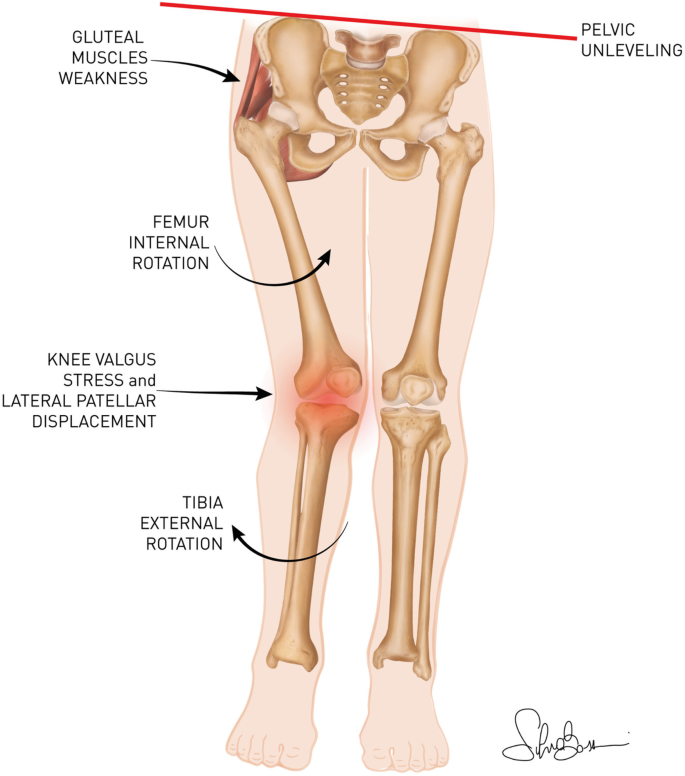
Tight muscles
Adductor brevis+
Adductor brevis
Muscle dictionary
- Functions
- Adducts the thigh and assists hip flexion and medial rotation
- Origin
- Body and inferior ramus of the pubis
- Insertion
- Pectineal line and proximal linea aspera of the femur
Adductor longus+
Adductor longus
Muscle dictionary
- Functions
- Adducts the hip and assists hip flexion and medial rotation
- Origin
- Body of the pubis inferior to the pubic crest
- Insertion
- Middle third of the linea aspera of the femur
Adductor magnus+
Adductor magnus
Muscle dictionary
- Functions
- Adducts the hip; the adductor portion assists flexion while the hamstring portion assists extension
- Origin
- Inferior pubic ramus, ischial ramus, and ischial tuberosity
- Insertion
- Linea aspera and adductor tubercle of the femur
Biceps femoris+
Biceps femoris
Muscle dictionary
- Functions
- Flexes the knee and laterally rotates the flexed leg; the long head also extends the hip
- Origin
- Ischial tuberosity and linea aspera of the femur
- Insertion
- Head of the fibula
Fibularis brevis+
Fibularis brevis
Muscle dictionary
- Functions
- Everts and assists plantarflexion of the foot and contributes to lateral ankle control
- Origin
- Distal lateral surface of the fibula
- Insertion
- Tuberosity at the base of the fifth metatarsal
Fibularis longus+
Fibularis longus
Muscle dictionary
- Functions
- Everts and plantarflexes the foot and helps support the transverse and lateral arches
- Origin
- Head and upper lateral surface of the fibula
- Insertion
- Base of the first metatarsal and medial cuneiform on the plantar foot
Fibularis tertius+
Fibularis tertius
Muscle dictionary
- Functions
- Dorsiflexes and everts the foot; it may be absent in some people
- Origin
- Distal anterior fibula and adjacent interosseous membrane
- Insertion
- Dorsal base of the fifth metatarsal
Tensor fasciae latae+
Tensor fasciae latae
Muscle dictionary
- Functions
- Flexes; abducts; and medially rotates the hip and helps stabilize the knee through the iliotibial tract
- Origin
- Anterior superior iliac spine and adjacent anterior iliac crest
- Insertion
- Iliotibial tract
Weakened muscles
Gluteus maximus+
Gluteus maximus
Muscle dictionary
- Functions
- Extends and laterally rotates the hip and contributes to powerful rising; climbing; and propulsion
- Origin
- Posterior ilium, sacrum, coccyx, and sacrotuberous ligament
- Insertion
- Iliotibial tract and gluteal tuberosity of the femur
Gluteus medius+
Gluteus medius
Muscle dictionary
- Functions
- Abducts the hip and helps stabilize the pelvis during single-leg support; anterior fibers assist medial rotation
- Origin
- External surface of the ilium between the anterior and posterior gluteal lines
- Insertion
- Lateral surface of the greater trochanter of the femur
Popliteus+
Popliteus
Muscle dictionary
- Functions
- Unlocks the knee from full extension by medially rotating the tibia on the femur; and assists knee flexion and rotational control
- Origin
- Lateral femoral condyle and lateral meniscus
- Insertion
- Posterior tibia superior to the soleal line