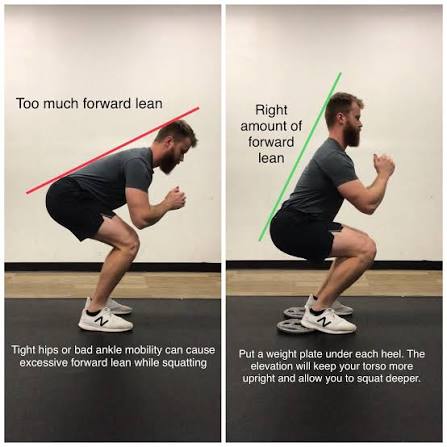
Quick comparison
- Perform a shallow squat at a comfortable stance width.
- Repeat with fingertips on a stable support.
- Repeat with a slightly smaller depth or a small heel lift.
- Note which version changes balance, symptoms, or trunk effort without forcing an upright chest.
Movement options
- Supported squat: hold a rail and lower slowly while keeping pressure comfortable across the feet.
- Ankle rock: keep the heel grounded and guide the knee forward through an easy range.
- Hip hinge to wall: move the hips toward a wall and return without holding the breath.
- Counterbalance squat: hold a light object in front and use only the depth you can control.
Reassess
Repeat the original squat at the same depth. Keep the option that improves balance, comfort, or confidence rather than chasing a perfectly vertical torso.
Examine low back pain evidence and limitationsExamine ankle stability evidence