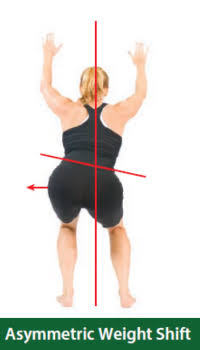
Quick movement check
- Stand near a stable support and notice pressure under each foot.
- Perform a shallow squat without deliberately centering yourself.
- Step onto a low surface with each leg and compare.
- Repeat the harder task with fingertip support or a smaller range.
Movement options
- Lateral weight shift: move the pelvis gently over one foot, pause, and return.
- Supported march: alternate lifting one foot while keeping the trunk relaxed.
- Low step-up: use a rail and step up slowly, then reset between repetitions.
- Staggered sit-to-stand: place one foot slightly back and compare each setup without forcing equal effort.
Reassess
Repeat the original squat, step, or walk. Look for improved comfort, confidence, or access to the less-used side rather than exact visual symmetry.
Examine low back pain evidence and limitationsExamine ankle stability evidence