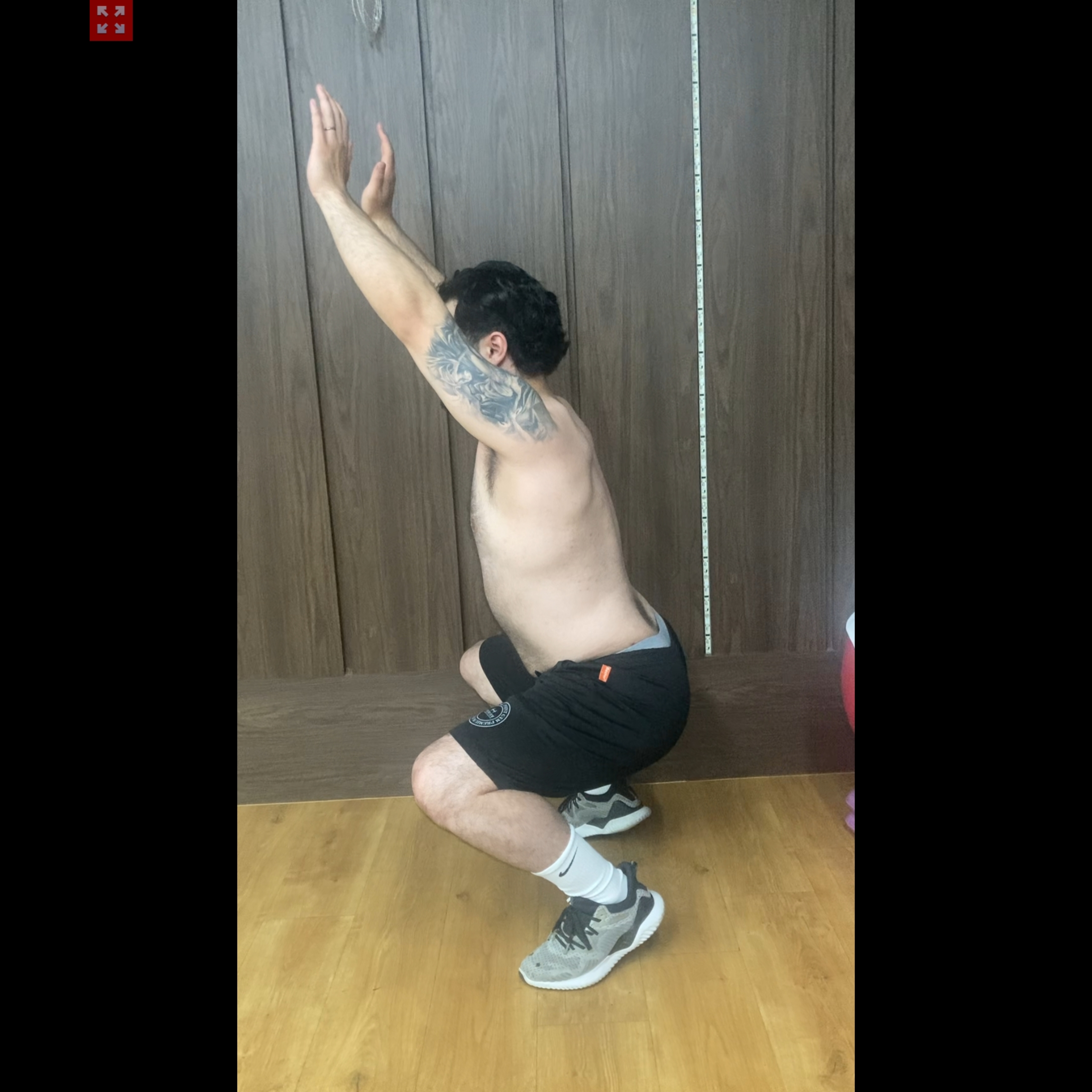
Quick comparison
- Perform a shallow squat while holding a stable support.
- Notice when either heel begins to lift.
- Repeat with a wider stance or less depth.
- Try a small heel support and compare balance, comfort, and range.
Movement options
- Supported ankle rock: move the knee forward over a comfortable toe line while the heel stays relaxed on the floor.
- Slow calf raise: rise evenly, pause, and lower under control through a comfortable range.
- Supported squat hold: pause briefly at a depth where the whole foot feels stable.
- Depth progression: increase squat depth in small steps only while balance and heel contact remain comfortable.
Reassess
Repeat the starting squat with the same support and depth. Improvement may be steadier balance, a later heel rise, or a more comfortable range—not necessarily a perfectly flat heel at every depth.
Examine ankle stability evidence