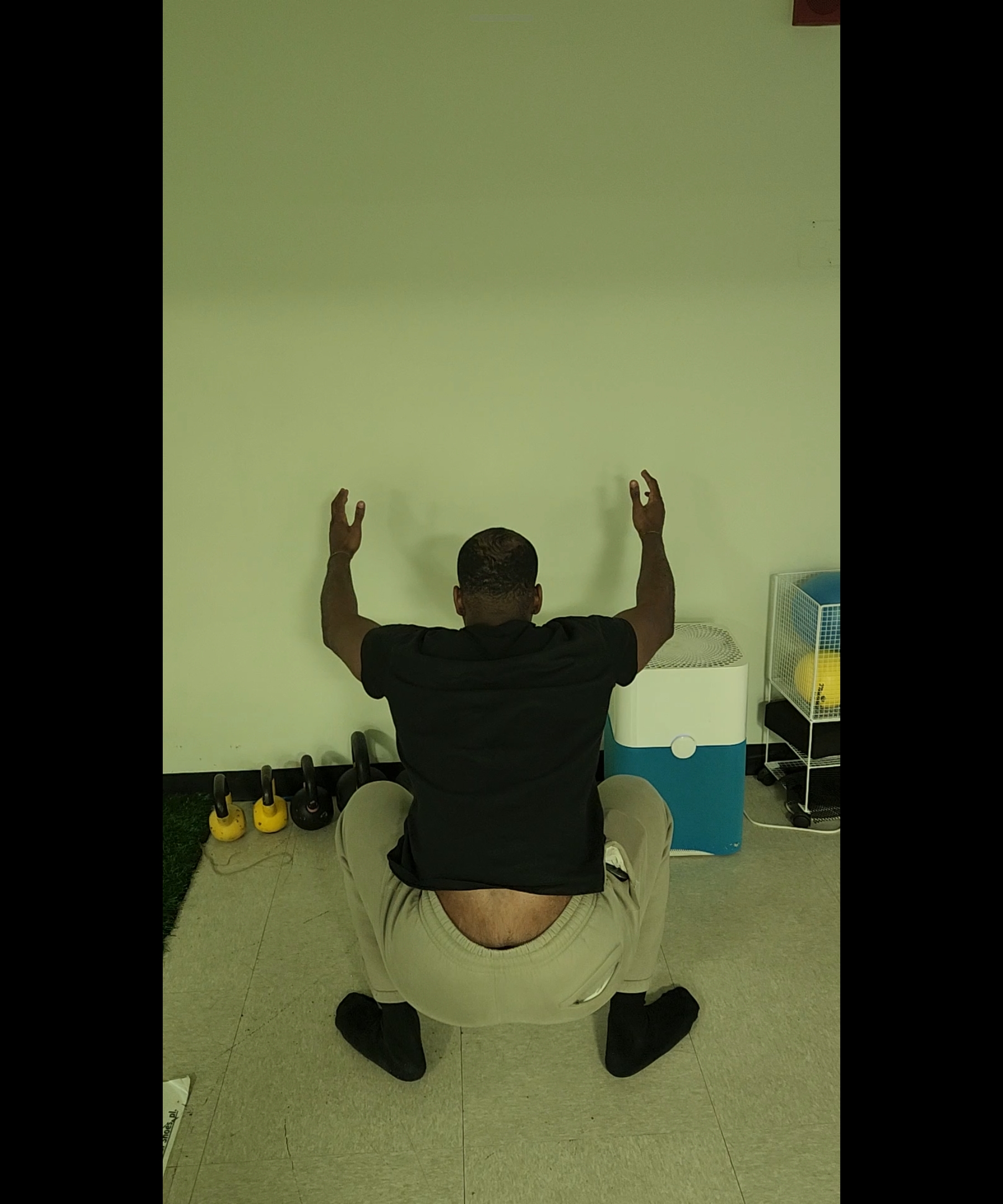
Quick movement check
- Stand in the foot angle that feels natural.
- Perform a shallow squat while noticing heel contact, balance, and symptoms.
- Try a small change in stance width before changing foot angle.
- Compare comfort and control; do not force the toes inward.
Movement options
- Supported ankle rock: with the heel down, move the knee forward over a comfortable toe line and return.
- Calf raise: rise through a comfortable pressure path across the forefoot, then lower slowly.
- Tripod balance: feel contact under the heel and both sides of the forefoot without gripping the toes.
- Stance experiment: test small changes in width and toe angle, keeping the version that improves the task.
Reassess
Repeat the original walk or squat. Keep the option only if it improves comfort, balance, or range without forcing the foot into a rigid position.
Examine ankle stability evidence