FormatGuided video
DeliveryPrivate library
AccessOn demand
The full session stays protected.Purchase access once, then stream it from your personal movement library.
Why this session
Stop collecting tips.
Start following a plan.
- 01
- 02
- 03
Why train the neck and shoulder together?
The movement pattern behind the program.
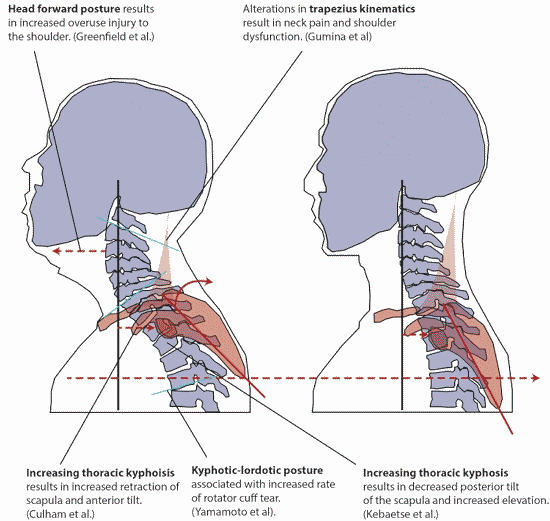
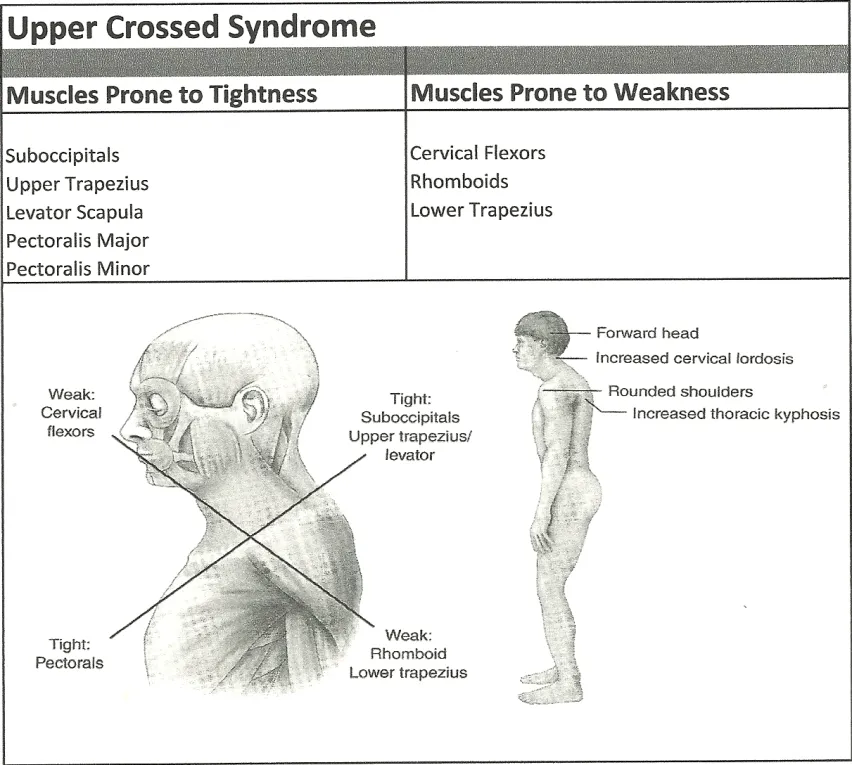
Some neck and shoulder patterns involve more work from the surface muscles and less contribution from the deep neck and shoulder-blade muscles.
This program uses Janda’s upper-crossed model to organize practice into three clear phases: reduce excess effort, build control, and integrate the movement.
How the session uses the model
Make room for easier movement.
Explore: suboccipitals, upper trapezius, levator scapulae, and pectorals.
Reduce unnecessary effort first so the next movement is easier to learn.Practice deep-neck-flexor control.
Train: a small, controlled head-and-neck movement without dominant superficial-muscle substitution.
Use a small, comfortable range instead of forcing the chin backward.Connect the neck to scapular support.
Integrate: lower and middle trapezius, serratus anterior, and comfortable shoulder movement.
Carry that neck control into shoulder-blade and arm movement.Free starting point
Make sense of what you’re noticing.
A photo cannot tell you why a position occurs or what you need. Start by noticing comfort, movement, symptoms, and what changes with support, breathing, or the task.
Open the free guide →Start with a useful self-check.
WHAT THE FREE GUIDE HELPS YOU DO
A posture label is not a treatment plan.
Use the guide to put the position in context before deciding whether a structured exercise session is appropriate for you.
- Compare rest with the activity that actually bothers you.
- Notice whether support, breathing, or gentle movement changes the response.
- Recognize symptoms that are better assessed by a qualified clinician.
Want structure, not another list of exercises?
Follow one paced sequence: settle overactive strategies, practise deep-neck-flexor control, then integrate it with lower-trapezius and scapular support.
Movement education, not diagnosis or individualized care. Seek assessment first for significant trauma, progressive weakness or numbness, balance changes, or severe and rapidly worsening symptoms.
Inside the session
Three phases. One integrated movement strategy.
Move through a deliberate beginning, practice, and reassessment instead of assembling disconnected exercises.
Why technique matters
Knowing what to do is one thing. Knowing how to make it work in your body is another.
This session teaches an effective active self-myofascial release (SMR) technique designed to reduce overactivity in targeted muscles. It combines focused pressure on tight areas with controlled movement of the joint and surrounding tissue to help break up adhesions, improve mobility, and prepare your body for the activation and integration work that follows.
Reduce unnecessary tension
Use targeted techniques for muscles that are working harder than needed.
Recruit the deep neck flexors
Learn to activate the deep neck flexors without substituting larger surface muscles.
Connect neck and scapular control
Bring the lower trapezius into the pattern to support scapular stability and coordinated posture.
Also included: protected streaming · personal library access · repeat viewing · no subscription
Built for real practice
Know exactly who this is for.
A clear session for self-directed learners who want structure, not hype.
A GOOD FIT IF
- You want a clear sequence instead of scattered tips.
- You can keep the practice within a comfortable range.
- You are comfortable learning independently by video.
SEEK ASSESSMENT FIRST IF
- Your symptoms followed significant or recent trauma.
- You have new or worsening weakness, numbness, balance changes, or pain spreading into a limb.
- You have severe, unusual, or rapidly worsening symptoms.
Scope: This is movement education, not medical diagnosis, individualized rehabilitation, or emergency care.
Simple access
Checkout to practice.
Three clear steps.
- 01
Purchase securely
Complete the one-time checkout for this session.
- 02
Open your secure link
Use your checkout email to enter your personal library.
- 03
Start moving
Stream the protected lesson whenever you are ready to practice.
Anatomy behind the sessionMuscles involved in this sequence +
Open a muscle group for origin, insertion, and movement actions.
Questions, answered
Know before you buy.
Does this include every program?
No. Your purchase is for the program shown on this page. Other programs are purchased separately; the public articles and anatomy dictionary remain free to explore.
Where do I find my purchase?
Open My library and use the email from checkout to access your purchased program.
Where can I review the purchase terms?
Read the purchase terms and refund policy before completing checkout.
Is this a subscription?
No. This is a one-time purchase for the session or program shown on this page.
Can I watch it more than once?
Yes. You can return to your purchased content through your personal library while your access remains active.
Can I request a refund?
Eligible requests are handled under our refund policy and applicable consumer law. Because individual responses vary, the session does not guarantee a particular clinical outcome.
Can I download or share the video?
No. The lesson uses protected streaming and is licensed for the purchaser’s personal use.
Is this medical treatment?
No. LegitBodyFix provides movement education, not diagnosis or medical treatment. Seek clinical advice when symptoms are acute, severe, or unclear.
Your next session